Background
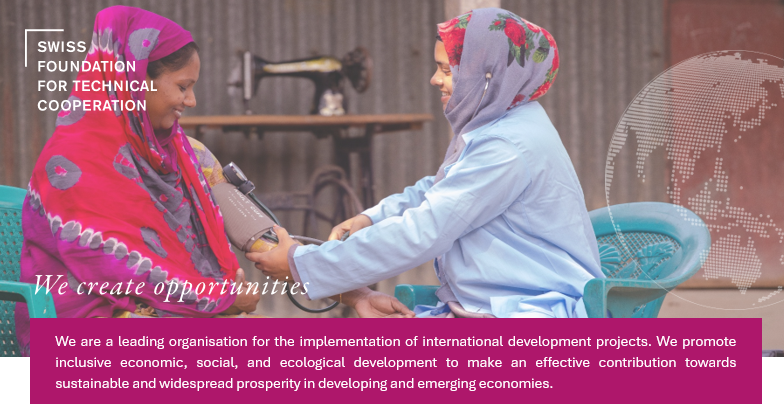
Bangladesh's rural healthcare system grapples with a shortage of skilled professionals. To bridge this gap, the Ministry of Health and Family Welfare introduced the Community Paramedic (CP) programme in 2009. This two-year, full-time course, overseen by the Bangladesh Nursing and Midwifery Council (BNMC), equips students with skills in maternal and child health, reproductive health, family planning, and basic primary healthcare services. Upon completion, graduates receive certification and registration to serve at the grassroots level. Currently, 44 Community Paramedic Training Institutes (CPTIs) operate across 26 districts, producing more than 1,000 CPs per year.
These professionals aim to enhance healthcare access in underserved rural areas. However, as CPs can refer patients only to the upazila (sub-district) level health facilities, their integration into the formal healthcare system remains limited. Besides, their impact on service delivery, affordability, quality of care, and cost-effectiveness in the primary healthcare system has lacked a comprehensive evaluation.
Swisscontact, Swiss Foundation for Technical Cooperation, headquartered in Zurich, was founded in 1959 by the Swiss private sector and academia for sustainable development cooperation. Through its projects, Swisscontact enables access to professional training, promotes local entrepreneurship, facilitates access to local financial service providers, and supports the efficient use of resources to promote decent employment and income generation. As an initiative to support Bangladesh in reaching the target of ensuring quality healthcare services in rural communities, Swisscontact has been implementing the ASTHA (Achieving Sustainability Towards Healthcare Access) project since 2011. ASTHA completed its Phase II between January 2019 and December 2022, which proved the business viability of Community Paramedic Training Institutes (CPTIs) and Community Paramedics (CPs). The project commenced its Phase III in January 2023 and will continue untill December 2026. In Phase III, ASTHA will be working in 12 districts of Bangladesh. For further information, please visit: https://www.swisscontact.org/en/projects/astha.
Objectives of the Assignment
The primary objective of this study is to investigate the contribution of CPs to Bangladesh's national primary healthcare system, particularly in rural settings. The study will focus on assessing their impact on improving access to quality and affordable healthcare services in rural areas, thereby generating evidence to inform policy regarding their integration and support for achieving national health outcomes aligned with the Sustainable Development Goals (SDGs).
Specifically, the study aims to:
1. Service Delivery Contributions
- Assess the accessibility, coverage, and quality of CP services across key health areas, including maternal and child health, family planning, adolescent health, nutrition, emergency care, and referrals.
- Conduct a comparative analysis of select health indicators (e.g., institutional delivery rates, contraceptive use, maternal/child mortality) between CP-supported and non-supported areas.
- Identify strengths, limitations, and service delivery gaps within the CP model.
- Examine the sustainability of the CP model in the future in terms of continuation (e.g., whether trained CPs continue working as CPs and whether they are incentivised), scale-up in other districts of Bangladesh, and response at the local government level.
|
-
Investigate how CPs influence access to and affordability of healthcare for rural populations, focusing on geographic reach, patient satisfaction, and perceived service quality.
-
Analyse the economic benefits (e.g., reduced healthcare costs for families or increased productivity due to better health) to the local communities.
2. Policy and System Integration
- Examine institutional barriers and enablers to integrating CPs into the formal public health system, including the scope for placement in government-run facilities.
- Assess regulatory, training, and oversight structures affecting CP legitimacy, uptake, and quality assurance.
- Generate recommendations for integrating CPs into national primary healthcare systems (in policies, action plans, annual plans, budgets, etc.) to enhance system-level resilience.
3. Gender and Social Inclusion
- Analyse how CPs respond to gender-specific health needs, particularly those of women and adolescent girls.
- Evaluate the role of female CPs in promoting women's empowerment, both as service providers and agents of health equity.
Click here to download the detailed ToR.
Submission Details
Interested firms and consultants should submit their technical proposals, both in hard copy and soft copy.
Please email the soft copy of the technical proposal to the Senior Officer - Procurement at bd.procurement@swisscontact.org, mentioning "Study on the Contribution of the Community Paramedics Program to Bangladesh's Primary Health Care System" in the subject line.
- Financial Proposal:
- Interested firms/consultants are required to submit a sealed envelope containing a hard copy of the financial proposal (Firms /Consultants are requested not to submit any soft copy of Financial Proposal through email or digital means).
- The financial proposal should be submitted to the address below:
Senior Officer - Procurement
Swisscontact Bangladesh
House 28, Road 43,
Gulshan 2, Dhaka 1212, Bangladesh
The subject line: "Study on the Contribution of the Community Paramedic (CP) Programme to Bangladesh's Primary Health Care System" must be mentioned on the envelope and email.
The deadline for submission is 19 July 2025. If anyone has any queries, please contact bd.procurement@swisscontact.org by 09 July 2025 with all the questions. Swisscontact will clarify the queries via email or will arrange an online briefing session on 13 July 2025.
N.B.: Swisscontact reserves the right to accept or reject any or all proposals without assigning any reason. Also, reserves the right to select more than one service provider for the assignment. |